The wrong tile usually doesn’t scream that something is off. It just feels a little off.
You might have a chrome faucet that looks too cold next to a warm travertine floor. Or a matte black fixture that feels like it’s fighting with a glossy subway tile instead of grounding it. By the time everything is installed, changing it is expensive and frustrating.
Most bathroom issues don’t come from bad taste. They come from making decisions separately instead of thinking about how everything works together.
This happens all the time. You pick a fixture you like. Then you pick a tile you like. Both look great on their own. But once they’re in the same space, they don’t quite click. The bathroom works, but it never feels finished.
Getting it right isn’t about rules. It’s about paying attention to how materials interact and making sure they support each other.
Why Finishes Go Wrong Early
A lot of people treat finishes like a final step. That’s usually where things start to fall apart.
Every surface has a kind of temperature and texture. Some finishes feel warm, others feel cool. Some reflect light, others absorb it. If you pick a fixture without thinking about the tile next to it, you can end up with something that technically works but still feels off.
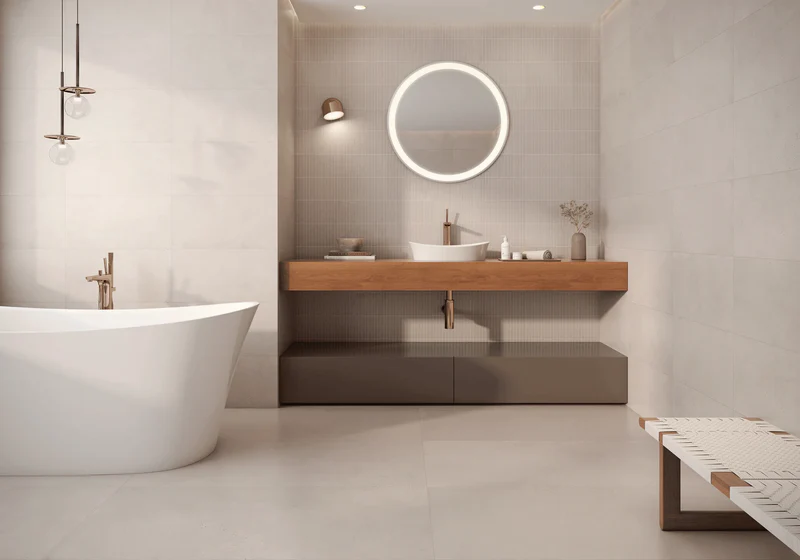
For example, take a warm white handmade tile. If you pair it with polished chrome, the cool tone of the chrome can pull against the warmth of the tile. Nothing is wrong, but the space never fully comes together.
Switch that chrome to something warmer like brass or bronze, and suddenly the tile looks richer. The fixture stops competing and starts blending in naturally.
Grout plays a role too. People often think it doesn’t matter much, but it really does. A dark grout can highlight shapes and patterns, while the wrong contrast can break up the look of a tile completely.
Undertones Matter More Than You Think
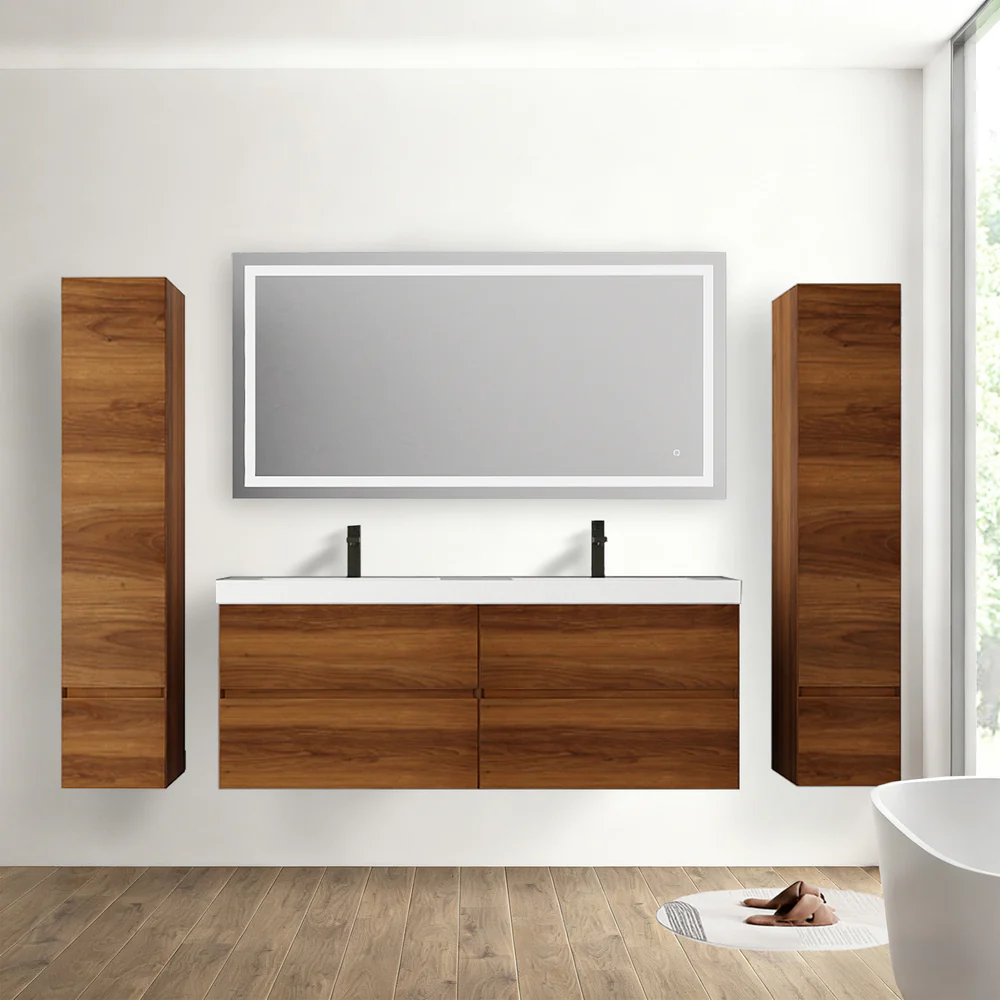
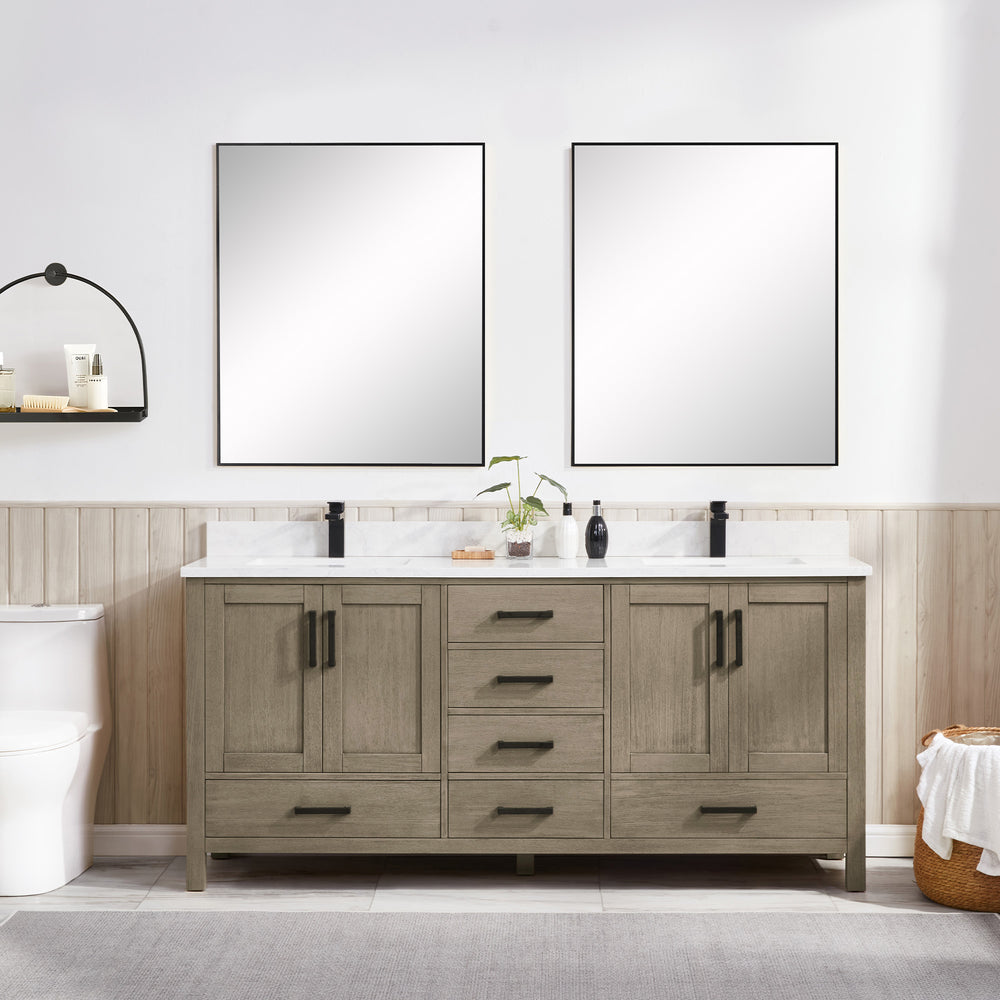
Not all whites are the same. Some lean pink, some yellow, some gray, some even green. And once they’re in a bathroom with mirrors and lighting, those undertones become way more noticeable.
That’s why a tile that looked neutral in a showroom can suddenly feel very different once installed.
Warm toned materials usually work best with other warm elements like brass or cream finishes. Cooler tones tend to pair better with chrome, nickel, or crisp whites.
The best thing you can do is bring samples into the actual space. Look at them next to your vanity, your fixtures, and your lighting. That’s the only way to know how they’ll really look.
Size and Pattern Change Everything
The size and pattern of your tile affect how everything else feels in the room.
Large tiles create a clean and calm look. In that kind of space, you can get away with bolder fixtures because there’s less visual noise.
Smaller or patterned tiles already bring a lot of energy. In those cases, simpler fixtures usually work better so the space doesn’t feel busy.
It’s really about balance. Something needs to lead, and something needs to support.
Mixing Metals Without Making It Messy
Mixing metals can look great, but only if it’s done on purpose.
The easiest way to do it is to choose one main finish and one secondary finish. Keep your main fixtures consistent, then use the second finish in smaller details like hardware or accents.
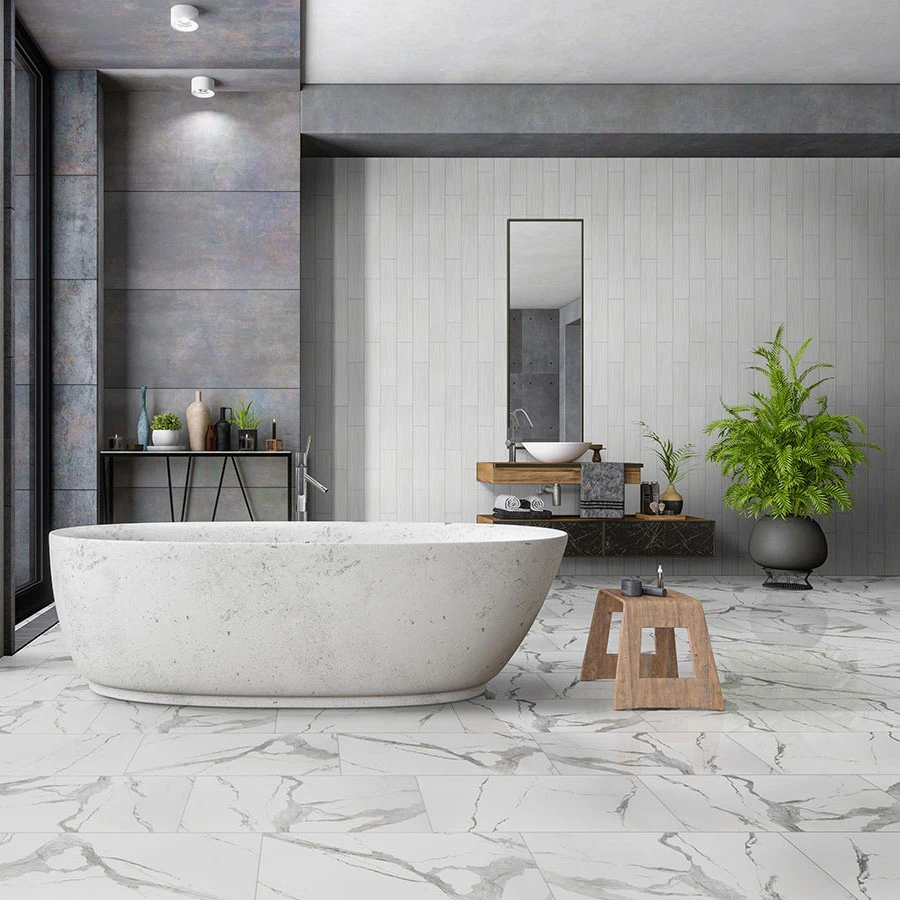
Tile helps tie it all together. Softer, more matte tiles make it easier to mix finishes. Very glossy tiles tend to reflect everything, which can make the mix feel chaotic.
Keeping it to two finishes usually gives you enough contrast without making things feel random.
Lighting Changes Everything
Lighting is one of the biggest reasons things look different after installation.
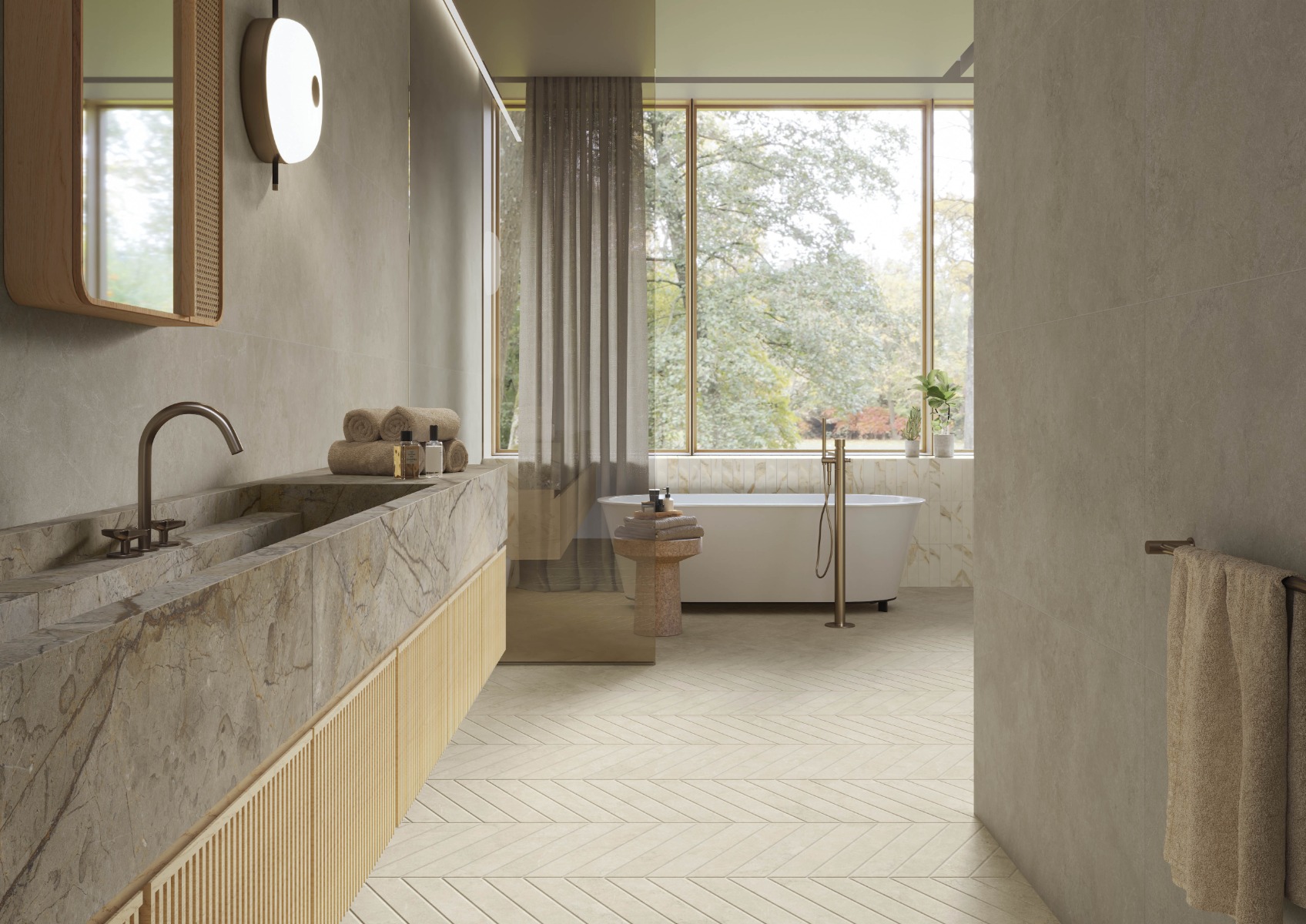
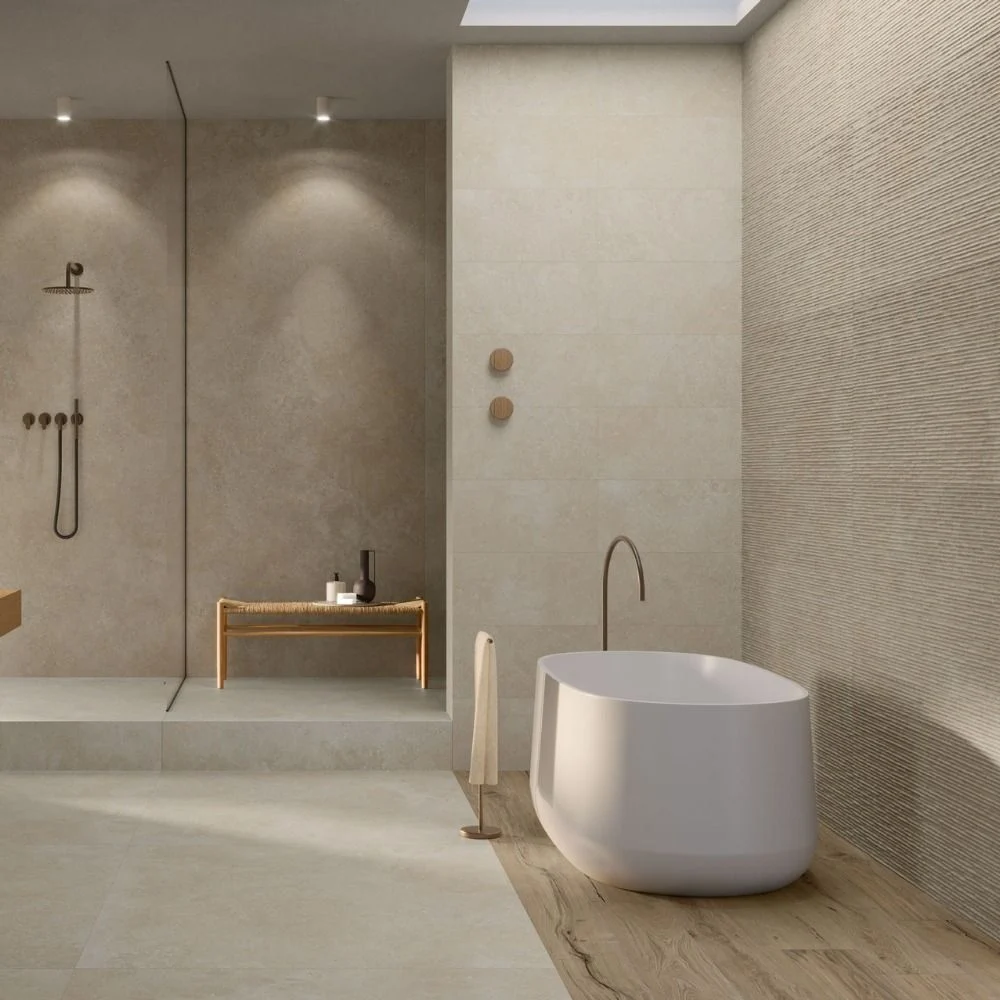
A tile that looked warm and rich in a showroom can look dull or muddy under cooler lighting. The same goes for fixtures. Something that looked like a beautiful gold can suddenly look greenish under the wrong light.
That’s why it’s so important to look at your materials under the actual lighting you’ll be using. It makes a huge difference.
Frequently Asked Questions:
Yes, and it can look really clean when done right. Just make sure there’s some variation in finish or texture so the space doesn’t feel flat.
A neutral tile with a subtle undertone is usually the easiest to work with. From there, you can build around your fixtures without things clashing.
You can, but it gets tricky fast. Two is usually the sweet spot if you want the space to feel intentional instead of random.
Key Takeaways
- Make tile and fixture decisions together instead of separately
- Always test samples in your actual space before committing
- Pay attention to undertones, not just color
- Let one element stand out and keep the others more supportive
- Stick to one or two metal finishes for a cleaner look
- Think about lighting early because it changes everything
The bathrooms that feel right are the ones where everything was considered together. Nothing was picked in isolation and just hoped to work.
You don’t need a huge budget to get there. You just need to be a bit more intentional with your process.
If you’re planning a renovation, start by building your material palette early. Take the time to see how everything works together before making final decisions.
And if you’re not sure where to start, it always helps to get a second opinion before things are locked in. Sometimes a small adjustment early on can save you from a much bigger problem later.