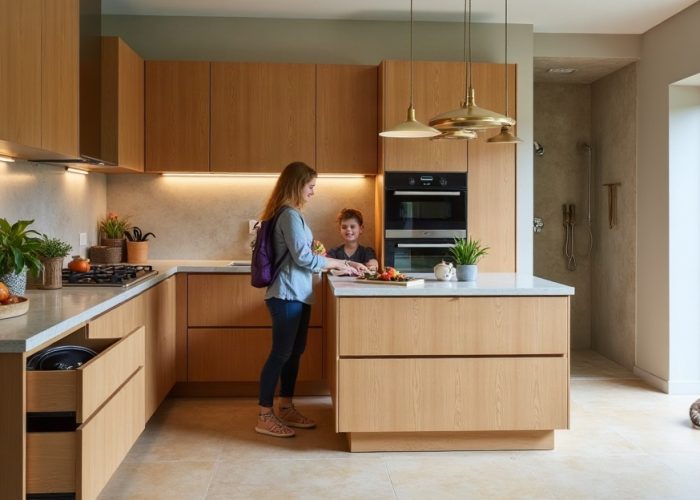
A mismatched kitchen design rarely happens all at once. It accumulates. A cabinet hardware upgrade here, a new appliance there, a backsplash selected in a hurry during renovation and never quite reconciled with the countertop it ended up beside. Over time, the kitchen functions fine but reads as unresolved: too many competing finishes, conflicting design languages, materials that were each chosen in isolation and show it. This is one of the most common problems in residential kitchen design, and it is also one of the most solvable.
Fixing a kitchen design mismatch does not necessarily require a full renovation. In many cases, it requires a clear diagnosis of what is actually conflicting and a disciplined approach to resolving those specific tensions. The difference between a kitchen that looks curated and one that looks cobbled together is rarely about budget. It is about understanding how the elements of a space relate to one another and knowing which ones to change, which to keep, and which to let lead.
Diagnosing the Mismatch Before You Change Anything
Most kitchen design mismatches fall into one of three categories: tonal conflict, stylistic inconsistency, or scale disproportion. Identifying which category is driving the visual noise determines the fix. Treating a tonal problem with a style solution, for example, produces more confusion rather than less.
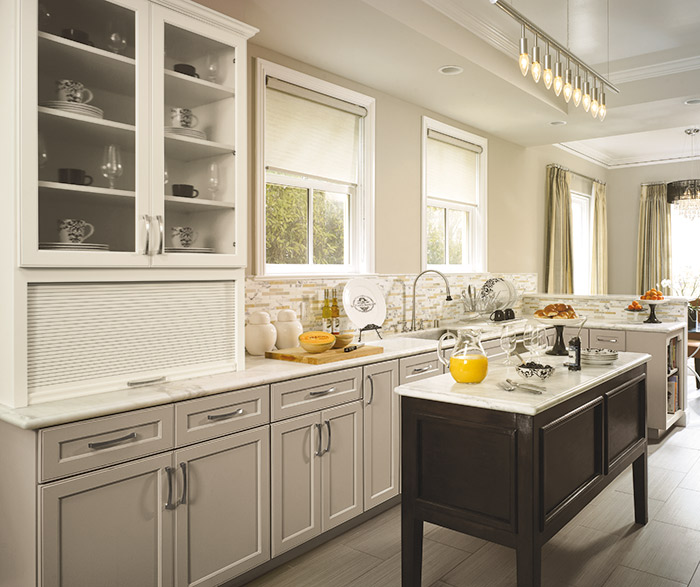
A tonal conflict happens when the color temperatures of major surfaces do not agree. Warm-toned wood cabinetry paired with a cool gray quartz countertop, or a cream subway tile backsplash laid beside a stark white shaker cabinet, both create this friction. The individual elements are not wrong. The temperature relationship between them is.
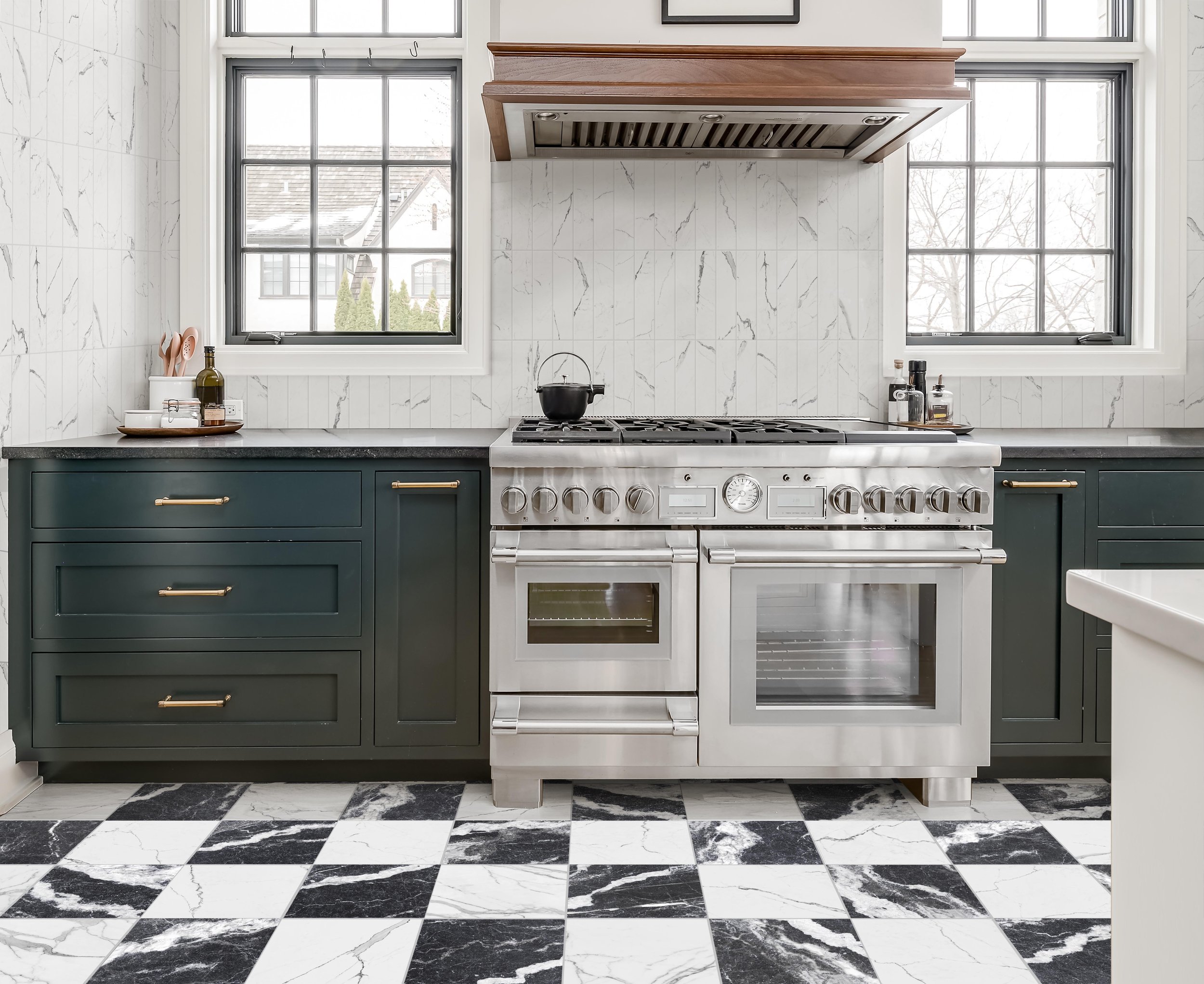
Stylistic inconsistency is more structural. It occurs when the design vocabulary of one element contradicts another: a sleek, flat-front European-style cabinet paired with an ornate, corbel-trimmed kitchen island, or a farmhouse apron sink installed beneath upper cabinets with a mid-century modern profile. These combinations can work, but only when the contrast is intentional and controlled. When it is accidental, the kitchen reads as two different rooms that happened to share a floor plan.
Scale disproportion is the quietest of the three and often the most overlooked. Oversized pendant lights in a low-ceiling kitchen, undersized cabinet hardware on large drawer fronts, or a tile backsplash pattern whose scale overwhelms the wall space it occupies: these proportional missteps create unease that homeowners feel but rarely identify. The room does not look wrong, exactly. It just never looks right.
How to Fix Kitchen Design Mismatch Caused by Tonal Conflict
Tonal conflict in a kitchen is corrected by establishing a dominant temperature and adjusting the outliers toward it. In practice, this means identifying the element that is the most fixed, the most expensive to change, or the most visually prominent, and letting it set the temperature of the entire palette.
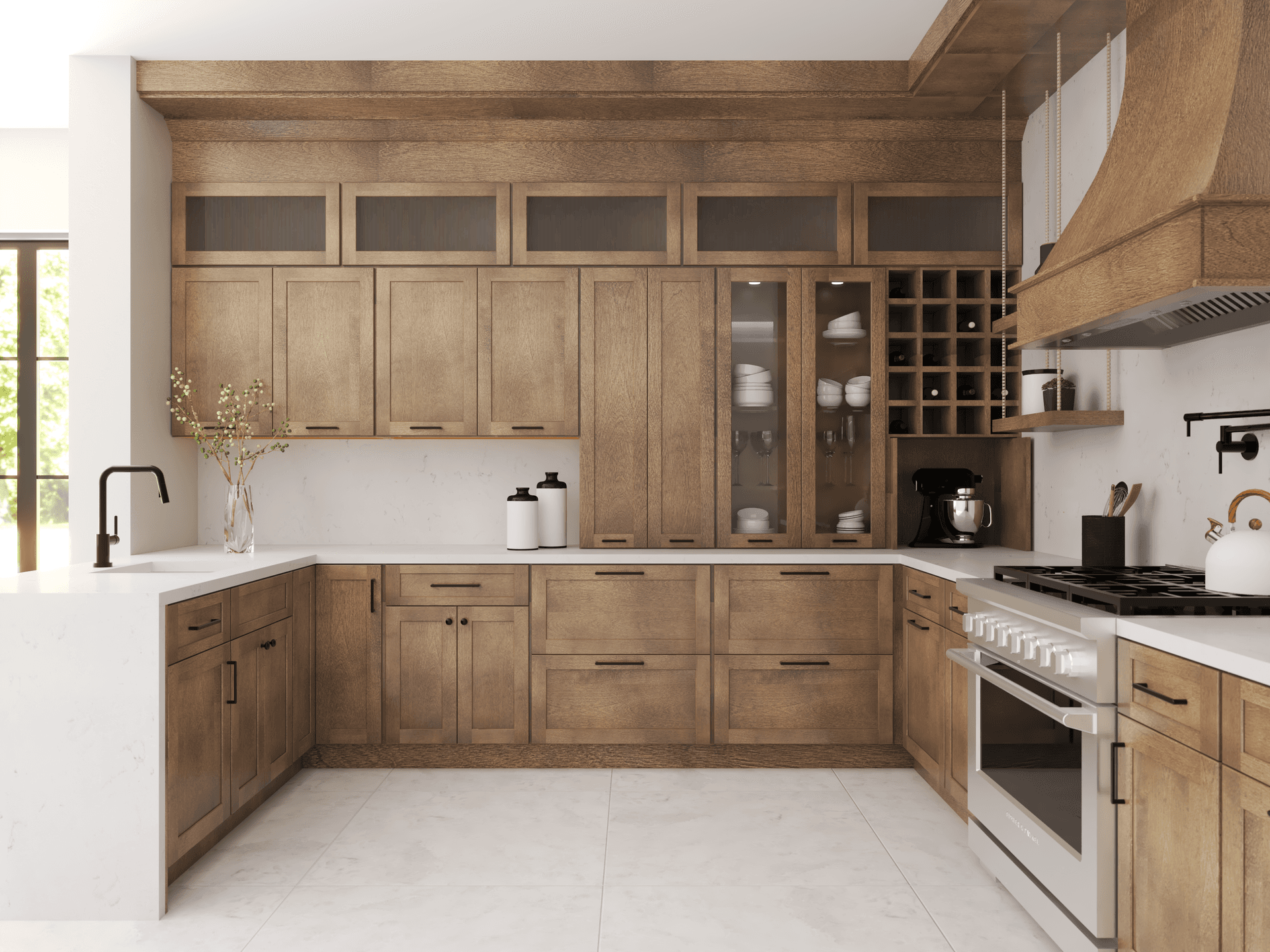
Consider a kitchen with warm-toned oak cabinetry, a cool white Carrara marble countertop, and stainless steel appliances. The marble reads cold against the oak warmth, and the stainless reinforces that cool temperature. If the cabinetry is the fixed element, the fix involves warming the other surfaces: swapping the stainless hardware for brushed brass or unlacquered bronze, introducing a backsplash tile with warm veining or ivory undertone, and reconsidering whether the countertop can be replaced with a quartzite or soapstone that reads warmer. If the marble is the investment piece that stays, the direction reverses: the cabinetry moves toward cooler tones, the hardware shifts to polished nickel or chrome, and the backsplash aligns with the marble’s cool gray-white temperature.
The most cost-effective tonal correction in any kitchen is hardware. Cabinet pulls and knobs occupy a significant portion of the visual surface area in a kitchen, particularly on shaker or flat-front cabinetry, and they act as temperature signals. Replacing mismatched or tonally neutral hardware with a finish that bridges the major surfaces often resolves the conflict without touching the cabinets, countertops, or appliances.
Paint color is the other low-cost lever. Wall color in a kitchen, even when limited to the area above the backsplash or between upper cabinets, affects how every other surface reads. A warm greige wall tone will push a cool-gray countertop toward warmth. A cool blue-white wall can make warm cabinetry look orange. Paint is not a workaround for a tonal mismatch but it can be the calibration tool that makes existing elements cohere.
Resolving Stylistic Inconsistency in the Kitchen
Stylistic inconsistency is the hardest category of kitchen design mismatch to fix without renovation because it is embedded in the architecture of the space: cabinet door profiles, island millwork, range hood design, and sink form. The practical path forward depends on how much flexibility exists in the fixed elements.
The most common version of this problem in contemporary kitchens is the transitional collision: a kitchen that began as traditional, with raised-panel cabinetry and ornamental details, that has been partially updated with modern fixtures, appliances, or finishes. The result sits uncomfortably between two design languages. The solution is not to choose one style over the other, but to find the transitional register that reads as intentional eclecticism rather than indecision.
Practically, this means editing rather than adding. A traditional kitchen with one too many ornamental elements, crown molding above the uppers, corbels on the island, decorative feet on the base cabinets, and a heavily detailed range hood, can be simplified by removing the elements that read most loudly. Stripping the corbels and replacing the decorative feet with a more recessed toe kick moves the kitchen meaningfully toward contemporary without touching a single cabinet door. The remaining traditional details read as considered restraint rather than excess.
For kitchens where a modern cabinet profile has been installed beside an existing traditional range hood or island, the most effective fix is surface alignment: painting both the same color, or introducing a material that bridges them. A natural stone countertop that runs across both surfaces, or a tile backsplash that reads as material-forward rather than style-specific, can create enough visual continuity to make the stylistic difference between the two elements feel intentional.
Correcting Scale and Proportion Problems in Kitchen Design
Scale problems in kitchen design are solved by adjusting the elements that are creating the disproportion, or by introducing counterweights that restore visual balance. Unlike tonal or stylistic mismatches, scale problems respond well to targeted changes without requiring broad redesign.
Pendant lighting is the most common scale offender. Pendants that hang too low, too high, or in the wrong proportion to the island below create immediate visual discomfort, even for people who cannot identify why. The standard specification for pendant height over a kitchen island is 30 to 36 inches from the bottom of the fixture to the countertop surface, but the right height also depends on the ceiling height, the pendant’s own visual weight, and whether the kitchen is open to adjacent rooms that create longer sightlines. In a kitchen with nine-foot ceilings, pendants sized for a twelve-foot loft read as miniature. In the same space, a statement drum pendant scaled correctly to the island can anchor the entire room.
Backsplash tile scale is a subtler version of the same problem. A large-format tile, such as a 4×12 or 3×12 subway, read differently on a long continuous backsplash than on a short tile-to-cabinet run between two windows. A tile pattern that feels proportional in one configuration can feel overwhelming or underwhelming in another. When a backsplash tile reads as too large or too busy for the space it occupies, the fix is grout: a grout color closely matched to the tile reduces the pattern’s visual energy by softening the joint lines, making the overall field read quieter without replacing the tile.
Cabinet hardware scale is one of the fastest and most affordable interventions in a kitchen design mismatch fix. Drawer pulls that are too short for wide drawers leave the drawer face feeling unanchored. Hardware that is too heavy in profile for a slim shaker door overwhelms the cabinet front. Replacing hardware to match both the scale of the surface and the visual weight of the overall cabinetry style is a change that typically costs under a few hundred dollars and shifts the room’s coherence immediately.
The Material Palette Strategy: How to Unify a Kitchen Without Starting Over
Beyond diagnosing and correcting specific conflicts, the most reliable long-term strategy for avoiding and resolving a kitchen design mismatch is to build around a defined material palette. A material palette is not a mood board. It is a specific, committed set of finishes: the cabinetry color and profile, the countertop material, the backsplash tile, the hardware finish, and the appliance finish, all evaluated together before any single element is purchased.
Interior designers typically limit a kitchen palette to three to four materials or finishes. The rule is not arbitrary. Every material added to a space introduces its own undertone, texture, reflectivity, and visual weight. Beyond four primary materials, the kitchen requires increasingly careful management to prevent the space from reading as a sample showroom. A kitchen with white shaker cabinetry, a white oak island, a Calacatta marble countertop, a warm terracotta tile backsplash, and unlacquered brass hardware is five elements, all warm-toned, all coordinated, and all legible. Add a sixth material without removing one and the palette begins to lose definition.
For kitchens in mid-renovation or mid-update where changes have already accumulated, building a retroactive palette is still the most useful organizing exercise. Document every fixed element: its color, its finish, its undertone. Then evaluate each new purchase against that existing inventory. The conflict that is causing the mismatch usually becomes visible within this inventory exercise before a single material change is made.
The kitchen that reads as designed, the one that makes visitors ask who did it, is rarely the kitchen with the most expensive materials. It is the kitchen where every element was chosen in relation to every other element, and where the palette has a clear logic that holds across the whole room. That logic is recoverable in almost any kitchen, even one that has accumulated a decade of mismatched updates. The work is diagnostic before it is creative.


Lighting Changes Everything
Lighting is one of the biggest reasons things look different after installation.
A tile that looked warm and rich in a showroom can look dull or muddy under cooler lighting. The same goes for fixtures. Something that looked like a beautiful gold can suddenly look greenish under the wrong light.
That’s why it’s so important to look at your materials under the actual lighting you’ll be using. It makes a huge difference.
Frequently Asked Questions:
In most cases, yes. Cabinets are the largest surface in a kitchen, but they are not always the source of the mismatch. If the cabinet profile and color are relatively neutral, correcting the hardware finish, the countertop material, or the backsplash tile often resolves the visual conflict without touching the cabinetry. If the cabinets themselves are the outlier, painting them is a significantly lower cost intervention than replacement and can shift their temperature and tone enough to bring them into alignment with the other surfaces. Cabinet painting with a professional finish costs a fraction of new cabinetry and, done well, is indistinguishable from factory finish.
The most frequent cause is incremental decision-making without a unifying palette. Homeowners select a countertop from one showroom, a backsplash tile in a different visit, hardware during a clearance sale, and appliances based on a separate set of priorities. Each decision made alone may be sound. Together, without a defined palette anchoring the relationships, the kitchen becomes a collection of individual choices rather than a cohesive room. The fix is to stop making decisions in sequence and start making them in relation to one another.
Open shelving reads as intentional when it is treated as a display decision rather than a storage decision. The shelf material should relate directly to another material in the kitchen: a white oak shelf that echoes the island top, or a painted shelf that matches the upper cabinet color. The bracket or support hardware should align with the dominant fixture finish. Most importantly, what is displayed on open shelves becomes part of the kitchen’s material palette, which means the ceramics, glassware, and objects on those shelves need to be curated with the same discipline as the finishes. Open shelving that holds mismatched everyday items amplifies the kitchen’s visual noise rather than reducing it.
Key Takeaways
- Diagnose before you renovate: most kitchen design mismatches fall into tonal conflict, stylistic inconsistency, or scale disproportion, and each requires a different fix.
- Hardware and paint are the lowest-cost, highest-impact interventions for a tonal mismatch. Change these before replacing any major surface.
- Stylistic inconsistency is best resolved by editing, not adding. Removing ornamental elements from a kitchen that is caught between two design languages often does more than introducing new ones.
- Scale problems respond to targeted changes: adjust pendant height, match grout to tile to reduce pattern energy, and replace hardware to proportion with the drawer and door sizes it occupies.
- Build a retroactive material palette by documenting every fixed element and evaluating new purchases against the existing inventory. The source of the conflict usually becomes visible in this exercise before any changes are made.
The Kitchen You Already Have, Made to Work
Knowing how to fix a mismatched kitchen design is as much about restraint as it is about renovation. The instinct when a kitchen feels off is to add: a new light fixture, a runner rug, a different set of barstools. Sometimes those additions help. More often, the kitchen already contains the solution, and the work is clarifying what is causing the friction, removing what is amplifying it, and aligning the remaining elements into a palette that has a logic.
A kitchen that has accumulated mismatched updates over a decade is not a failed kitchen. It is a kitchen that needs a clear point of view applied retroactively. Identify the element you love most and would not change. Let that element set the temperature, the style register, and the scale of everything around it. The decisions that follow become significantly easier, and the kitchen that results is one that reads as considered rather than accumulated.
The goal is not a kitchen that looks like a showroom. It is a kitchen that looks like it was meant to be exactly what it is. Book a consultation with us to find the right kitchen design for you.