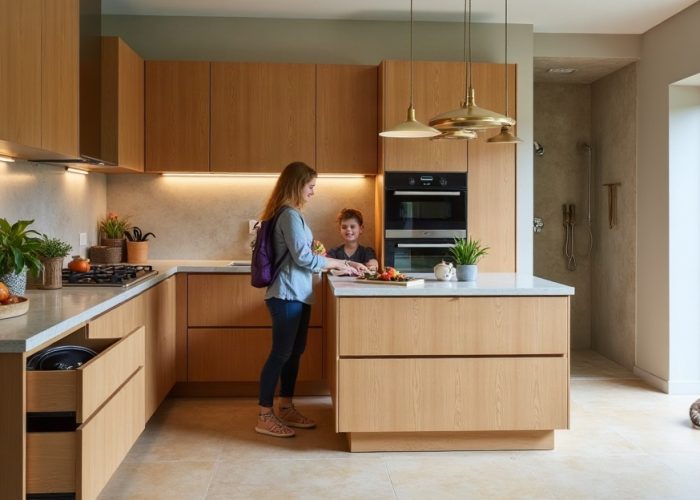
A well designed backsplash can completely transform a kitchen, turning it into a space that feels cohesive, functional, and visually refined. Choosing the right kitchen backsplash tile is more than a finishing touch. It directly impacts daily use, maintenance, and long term property value.
The challenge is not the lack of options, but choosing the right one. With so many materials, colors, and layouts available, understanding the fundamentals of tile interior design helps you make a decision that works both visually and practically.
Spark Joy with Tile Interior Design
Tile interior design begins with defining the mood of your kitchen. Color plays a major role in how the space feels and functions. Cooler tones like blue and green create a calm, clean atmosphere, while warmer shades such as beige or terracotta add warmth and balance, especially in kitchens with stainless steel or industrial finishes.
Neutral palettes remain one of the most reliable choices because they adapt easily to changing styles and resale needs. Subway tiles continue to be one of the most popular backsplash tile ideas because they offer a timeless look that works across both traditional and contemporary interiors.
Lighting should also be considered early in the process. Most kitchens rely on a mix of natural light and LED fixtures, which can alter how tile colors appear. Viewing samples in person and then testing them in your own kitchen ensures the final result matches your expectations.
Texture adds another layer of impact. Glossy tiles reflect light and can make smaller kitchens feel brighter and more open, while matte finishes create a softer, more modern look and are easier to maintain in high use cooking areas.
Size Up Smart Kitchen Tiles
Tile size directly affects both the look and functionality of your backsplash. In larger kitchens, large format tiles create a clean, streamlined appearance with fewer grout lines, making them easier to maintain. This approach works especially well in open plan layouts and modern renovations.
For smaller kitchens, compact tiles such as mosaics or classic subway tiles can create depth and visual interest. When installed correctly, they help the space feel more expansive rather than crowded.
The standard backsplash height, typically around 18 inches between the countertop and cabinets, should guide your tile layout. Proportion is key. Oversized tiles in a small space can feel overwhelming, while very small tiles in a large kitchen may appear busy.
Material selection is just as important as size. Porcelain tiles are often the preferred choice because they are highly durable, resistant to stains, and easy to clean. Ceramic tiles offer versatility and affordability, while glass tiles are ideal for reflecting light in darker interiors.
Colour Pop for Kitchen Backsplash Tiles
Color is one of the most powerful tools in backsplash design. The right choice can tie together cabinetry, countertops, and flooring, creating a unified look.
High contrast combinations, such as white cabinets paired with darker backsplash tiles, add depth and visual definition. This approach works well in modern kitchen design where clean and refined aesthetics are prioritized. On the other hand, tone on tone palettes create a more subtle and cohesive appearance.
For homeowners looking to make a statement, deeper hues like navy, emerald, or charcoal can serve as a focal point without overwhelming the space. These colors are especially effective when balanced with neutral surroundings.
Because lighting conditions vary in every home, it is essential to test tile samples in your own kitchen. Colors can shift depending on the time of day and lighting type, making in home testing a critical step.
Pattern Play in Kitchen Tiles
Patterns can elevate a backsplash from simple to distinctive, but they should be used with intention. Subway tiles remain a staple because their structured repetition creates a clean and organized look that appeals to a wide range of styles.
For a more contemporary approach, geometric patterns such as hexagon or chevron tiles introduce movement and visual interest. These designs are especially effective when used as a focal point.
Herringbone layouts are another strong option, adding direction and making countertops appear longer. In kitchens with higher ceilings, vertically oriented patterns can draw the eye upward and enhance the perception of space.
The key is restraint. Focusing on one primary pattern ensures the design remains cohesive rather than overwhelming. Keeping surrounding elements simple allows the backsplash to stand out without creating visual clutter.
Edge It Right with Kitchen Backsplash Tiles
Finishing details are what give a backsplash a polished, professional appearance. Edge treatments such as bullnose tiles create smooth transitions, while mitered edges offer a clean and seamless look. Beveled tiles add subtle depth and reflect light in a way that enhances texture.
Grout selection also plays a critical role. Matching grout creates a uniform look, while contrasting grout highlights the tile pattern and adds definition. In a busy kitchen environment, epoxy grout is often recommended because it resists moisture, stains, and daily wear more effectively than traditional options.
The finish of the tile should align with your lifestyle. Glossy finishes brighten the space but require more frequent cleaning, while matte finishes provide a more forgiving and low maintenance surface.
Frequently Asked Questions:
What size kitchen backsplash tiles work best for small kitchens?
Smaller tiles such as subway or mosaic formats help create depth and make compact kitchens feel more open.
Can bathroom tiles be used for kitchen backsplash tile projects?
Yes, as long as they are durable, water resistant, and suitable for kitchen conditions.
How long do kitchen backsplash tiles last?
With proper installation and care, high quality tiles can last 20 years or more.
Key Takeaways
- Choosing the perfect kitchen backsplash tile requires balancing design and practicality.
- The right combination of color, size, material, and pattern creates a space that feels cohesive and easy to maintain.
- Visiting a tile showroom, testing samples in your home, and focusing on durability will help ensure your backsplash remains visually appealing for years.
Choosing kitchen tiles is one of the most important decisions in any renovation. It sets the tone for your space, impacts durability, and plays a key role in how everything comes together.
With so many options available, it’s easy to feel overwhelmed, but with the right guidance, the process becomes clear and manageable. Contact us and get a consultation for your next kitchen renovation.