15 Kitchen Light Fixture Ideas to Brighten Every Layout
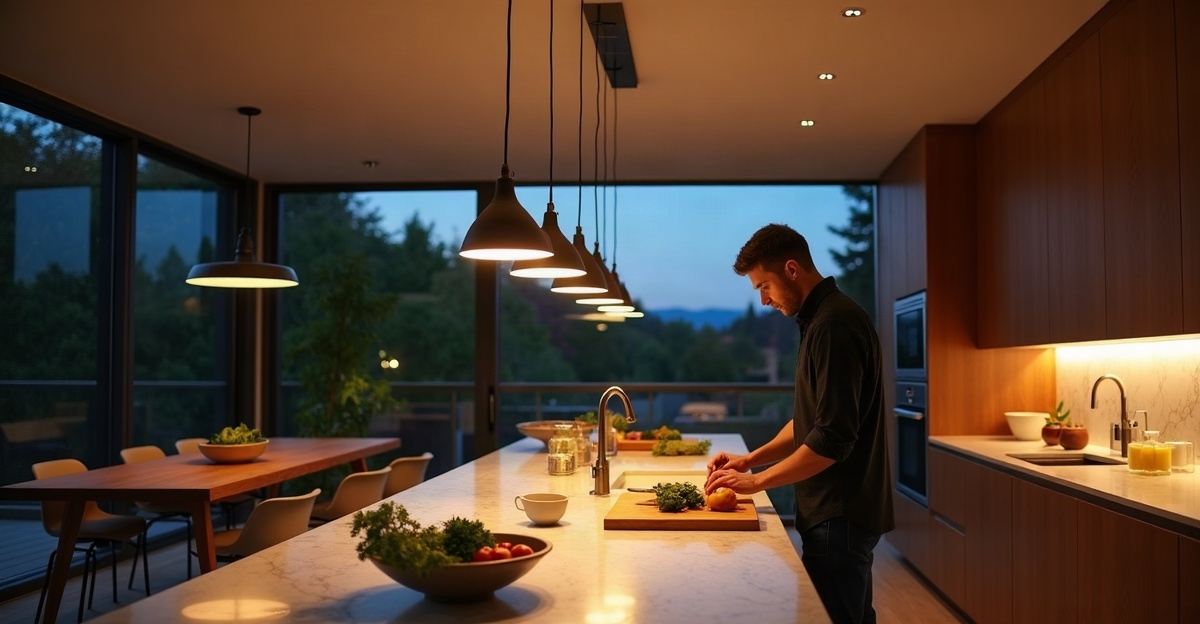
These kitchen light fixture ideas show how we can combine ambient, task, and accent lighting across islands, countertops, dining areas, and walkways. We recommend pendants, linear suspensions, recessed lights, and under-cabinet LEDs that suit the kitchen layout, ceiling height, work zones, and finishes.
Key Takeaways
- Layer ambient, task, and accent lighting to limit countertop shadows and support a more practical kitchen.
- Install pendants or linear suspension lights over islands, and match their scale and spacing to the island length and ceiling height.
- Choose flush mounts, semi-flush fixtures, or recessed lighting for low ceilings, smaller kitchens, and layouts that require open sightlines.
- Add under-cabinet LED lighting to illuminate prep, cooking, and cleaning surfaces, especially in galley kitchens or below deep upper cabinets.
- Select warm-neutral 2700K–3000K bulbs, high-CRI LEDs, and dimmable controls for accurate color rendering and adaptable brightness.
Plan Kitchen Lighting in Layers Before Choosing a Fixture
We plan kitchen lighting in layers so every area feels bright, practical, and inviting. A single ceiling fixture can leave shadows across countertops when we stand between the light and the work surface.
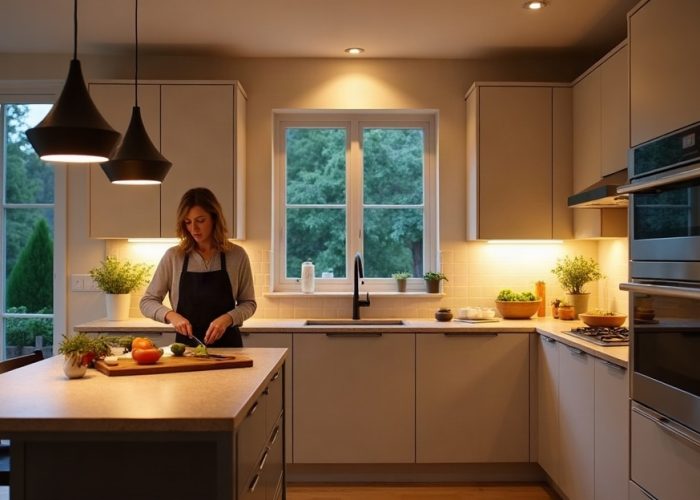
The strongest kitchen light fixture ideas combine three lighting layers. Ambient lighting provides broad visibility for circulation and general brightness through recessed lights, flush mounts, or ceiling fixtures. Task lighting focuses on food prep, cooking, cleaning, and recipe reading, with under-cabinet lights, targeted recessed fixtures, and select pendants doing most of the work. Accent lighting adds depth by highlighting a backsplash, open shelving, cabinetry, or dining zone.
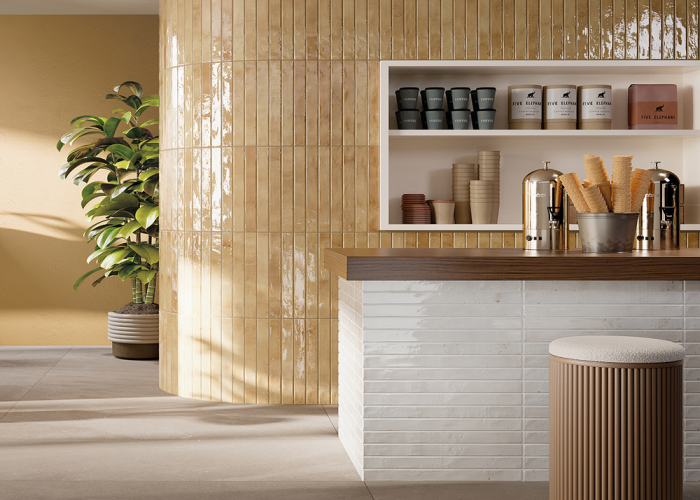
The best kitchen light fixtures support the layout first, then reinforce the design. We coordinate finishes and shapes with cabinetry, countertops, tile, hardware, and the architecture of the home instead of choosing a fixture because it is currently popular. Our kitchen tile design guide can help connect lighting choices with backsplash materials and finish combinations.
Kitchen Island and Peninsula Fixtures That Create a Focal Point
Glass globe pendants bring soft, broad light to standard islands in transitional, coastal, and modern kitchens. Clear glass keeps sightlines open, while frosted glass helps reduce glare on polished stone countertops. We pair them with recessed and under-cabinet lighting so the island remains a functional prep zone.
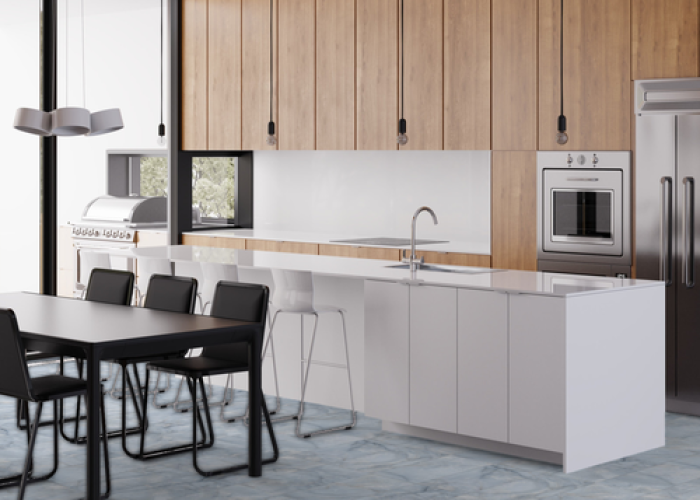
Linear suspension lights suit long islands and wide peninsulas. Their horizontal form follows the work surface and spreads light more evenly than several small fixtures. A slim profile works especially well in compact kitchens, where a heavy fixture could interrupt views or make the room feel crowded.
Mini pendants offer a smart solution for narrow islands, compact peninsulas, and small kitchens with limited ceiling clearance. They add focused illumination without overwhelming the room. Spacing should reflect the island length, pendant diameter, and the manufacturer’s placement guidance. A crowded row of pendants can make even a well-planned kitchen feel busy.
Statement pendants give large kitchens and high ceilings a stronger focal point. These modern kitchen light fixtures can fill unused vertical space and define the island as the center of the room. Their visual impact needs support from practical lighting below, especially if the island is used for chopping, cooking, or homework.
For islands, we recommend decorative pendants or a linear fixture supported by recessed and under-cabinet lights. Peninsulas often need smaller pendants, recessed lights, or a compact linear style that respects nearby walkways. For more planning inspiration, explore these kitchen remodel ideas.
Ceiling and Cabinet Lighting for Brighter Work Zones
Flush-mount and semi-flush-mount fixtures work well with low ceilings, apartments, and small kitchens. They provide ambient light without reducing headroom or blocking views. Styles range from minimalist and coastal to traditional and transitional, but every option still needs task lighting at the counters.
Recessed ceiling lights give open kitchens, galley layouts, and rooms with several work zones even illumination without visual clutter. Position them to light the countertop surface instead of placing them directly behind the person working at the counter. That simple adjustment helps prevent shadows during prep and cleanup.
Adjustable or gimbal recessed lights bring extra precision to sinks, cooktops, pantry areas, angled ceilings, and feature walls. Their aim can shift light where it is needed most. Proper adjustment matters, since a poorly aimed fixture can create uneven brightness or uncomfortable glare.
Under-cabinet LED strip lights and puck lights belong in nearly every kitchen. These LED kitchen light fixtures shine directly onto prep, cooking, and cleaning surfaces, which makes a major difference in galley kitchens and rooms with deep upper cabinets. Diffused strips, channels, or carefully placed pucks prevent visible hotspots on glossy tile or reflective stone.
LED channel lighting beneath floating shelves or inside glass-front cabinets adds a quiet accent layer. It brings attention to tile, stone, dishware, and decorative details while giving the kitchen more dimension after dark. We keep this effect subtle, since display lighting should never replace essential task lighting.
Galley kitchens benefit from even ceiling coverage and strong under-cabinet lighting. Oversized pendants can visually narrow the room. In smaller kitchens, fewer purposeful fixtures usually produce a cleaner result. Our small kitchen renovation ideas offer more ways to make compact layouts feel open and efficient.
Dining, Decorative, and Flexible Kitchen Lighting Ideas
A kitchen chandelier can anchor a dining table or large island and create a softer transition between cooking and gathering. It works particularly well in traditional, transitional, and open-plan homes. Scale matters, and the bottom of the fixture should preserve comfortable sightlines across the table or island.
Lantern-style fixtures add structured character to classic, farmhouse, and warm wood kitchens. They work above breakfast nooks, islands, and dining spaces. Open-frame lanterns may expose bulbs, so dimmable bulbs or shaded lamping can help control glare.
Industrial metal pendants suit loft, urban, and modern farmhouse spaces. Their dark or opaque shades direct light downward and create useful contrast against light cabinetry. Because they form focused pools of light, we add nearby ambient lighting rather than relying on them alone.
Track lighting and monorail systems offer flexibility in galley kitchens, awkward layouts, and remodels with limited junction boxes. Adjustable heads can direct light to counters, shelves, art, and walkways from one system. Streamlined heads and coordinated finishes keep the result polished instead of commercial.
Wall sconces add eye-level warmth near breakfast nooks, banquettes, open shelving, and focal walls. They bring balance to areas where ceiling lighting is impractical. Placement must avoid cabinet doors, seating, and circulation paths.
Toe-kick lighting beneath islands and base cabinets creates a gentle nighttime guide and a floating effect along cabinetry. It is accent lighting, not a substitute for overhead or countertop illumination. In open-concept homes, these layers help distinguish cooking, island, and dining zones while fixture finishes connect adjoining spaces. Browse current kitchen renovation trends for coordinated material and lighting inspiration.
How to Choose the Best Kitchen Light Fixtures for Your Space
As a starting point, we often hang island pendants roughly 30–36 inches above the countertop. Dining fixtures commonly sit around 30–36 inches above the tabletop. Fixture size, ceiling height, sightlines, and household needs can change the final position.
Leave enough room between pendants so they do not crowd one another or block views through the kitchen. Island length, pendant diameter, and manufacturer recommendations should guide the layout. Larger islands and tall ceilings can support wider, more substantial pieces, while compact rooms often look better with smaller pendants, slim linear lights, recessed fixtures, or flush mounts.
Modern kitchen light fixtures work best when their finish, shape, and scale relate to the cabinetry, backsplash, counters, and hardware. Traditional, coastal, industrial, farmhouse, transitional, and minimalist styles can all look right when they fit the home’s architecture and long-term design direction. We can compare finishes with kitchen cabinets and countertop materials before finalizing the fixture style.
Existing electrical locations also affect the plan. We should account for junction boxes early, especially if a new island, dining area, or ceiling layout changes the fixture position. A qualified electrician should assess new wiring, circuit changes, code questions, fixture installation, and complex ceiling conditions.
Light Quality, LED Choices, and Renovation Planning Support
For many residential kitchens, warm-neutral white light in the 2700K–3000K range creates a comfortable balance between clarity and warmth. Daylight exposure, material colors, personal preference, and lighting in adjoining rooms should guide the final selection. We also recommend a high CRI of 90+ where possible, so food, cabinetry, tile, stone, and paint colors appear more natural.
Dimmable fixtures and compatible dimmer controls let the kitchen shift from bright prep lighting to a calmer setting for meals or entertaining. Frosted shades, diffusers, shaded bulbs, and properly aimed recessed lights help manage glare, particularly around glossy backsplashes and reflective countertops.
LED describes the light source, not the fixture style. LED kitchen light fixtures can be traditional, industrial, modern, or minimalist. We can choose integrated LED fixtures for a streamlined appearance or decorative fixtures that use replaceable LED bulbs.
Lighting plans become easier to visualize with original project imagery, showroom displays, diagrams, and annotated examples. Image captions should identify the layout, lighting layers, fixture type, and coordinating materials. Clear alt text, such as “glass globe pendant lights over a white kitchen island with under-cabinet LED lighting,” also gives each image useful context.
Lighting is easiest to plan when we can see how it works with tile, cabinetry, countertops, hardware, and paint colors. Visit Galactic Tiles or speak with our design team to coordinate the finishes that will bring the kitchen plan together. We can also use 3D kitchen planning and professional kitchen design guidance to confirm scale, sightlines, and material pairings before installation.
Meta Title
15 Kitchen Light Fixture Ideas for Every Layout | Galactic Tiles
Meta Description
Explore kitchen light fixture ideas for islands, low ceilings, galley kitchens, and dining spaces. Learn how to layer ambient, task, and accent lighting.
URL Slug
/kitchen-light-fixtures-ideas/