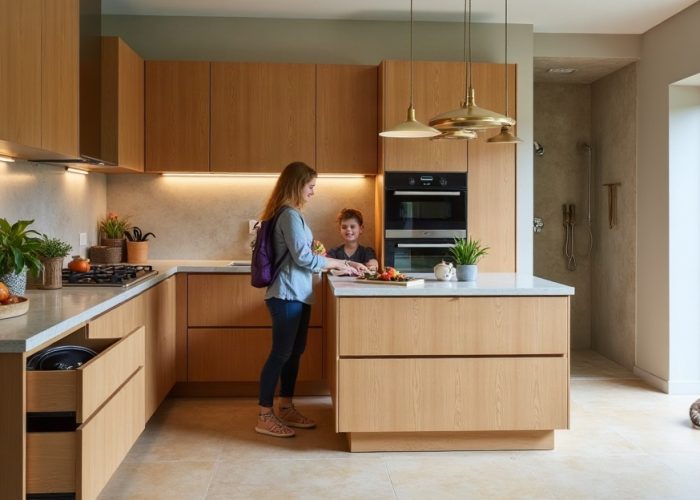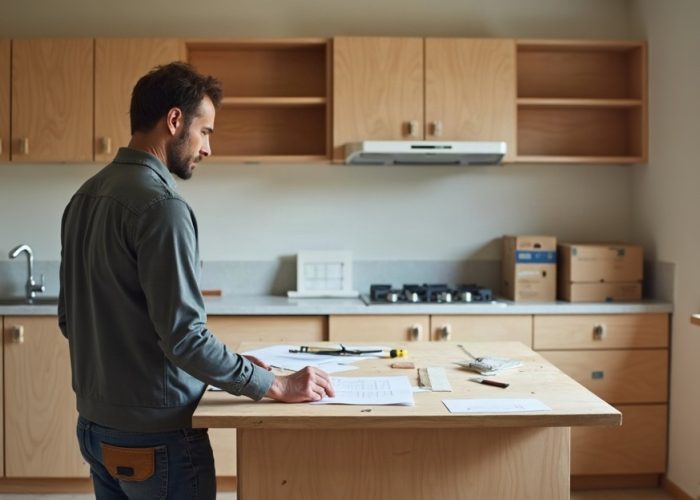
Mixing bathroom or kitchen tiles is where many renovations either start to feel custom or start to feel confused.
One tile can be easy to choose. Two tiles require more thought. Three or more tiles can either create a layered, designer-level space or make the room feel visually busy before anything else is installed.
The difference is not about using “safe” tiles. It is about creating a clear relationship between color, scale, texture, finish, pattern, and placement.
A bathroom with marble-look floor tile, zellige shower tile, and a small mosaic niche can feel calm and elevated. A kitchen with stone-look flooring, a handmade-style backsplash, and a patterned feature detail can feel intentional and full of personality. But when every tile is trying to be the focal point, the eye has nowhere to rest.
The goal is not to avoid mixing tiles. The goal is to mix them with control.
At Galactic Tiles, we help homeowners, designers, and contractors build tile palettes that feel layered, functional, and cohesive. Whether you are working with subway tile, zellige, mosaics, marble-look porcelain, natural stone, terrazzo, terracotta, patterned tile, or wood-look tile, the right combination can make a space feel more refined, not more chaotic.
Why Mixed Tile Designs Can Look Chaotic
Tile chaos usually happens when every surface is treated separately.
You choose one tile for the floor. Another for the shower wall. Another for the niche. Another for the backsplash. Another for the accent wall. Each one may look beautiful on its own, but together they may not share a common design language.
The problem is not that the tiles are different. The problem is that they are different in too many ways at once.
For example, if one tile has strong veining, another has a bold pattern, another has a glossy handmade texture, and another has a high-contrast color, the space can start to feel visually crowded. There is no hierarchy. No pause. No quiet surface to balance the stronger choices.
Good tile mixing starts with restraint. Not boring restraint — intentional restraint.
You can absolutely use contrast. You can use pattern. You can mix finishes. You can bring in color. But there needs to be a reason for each tile, and each one should support the room as a whole.
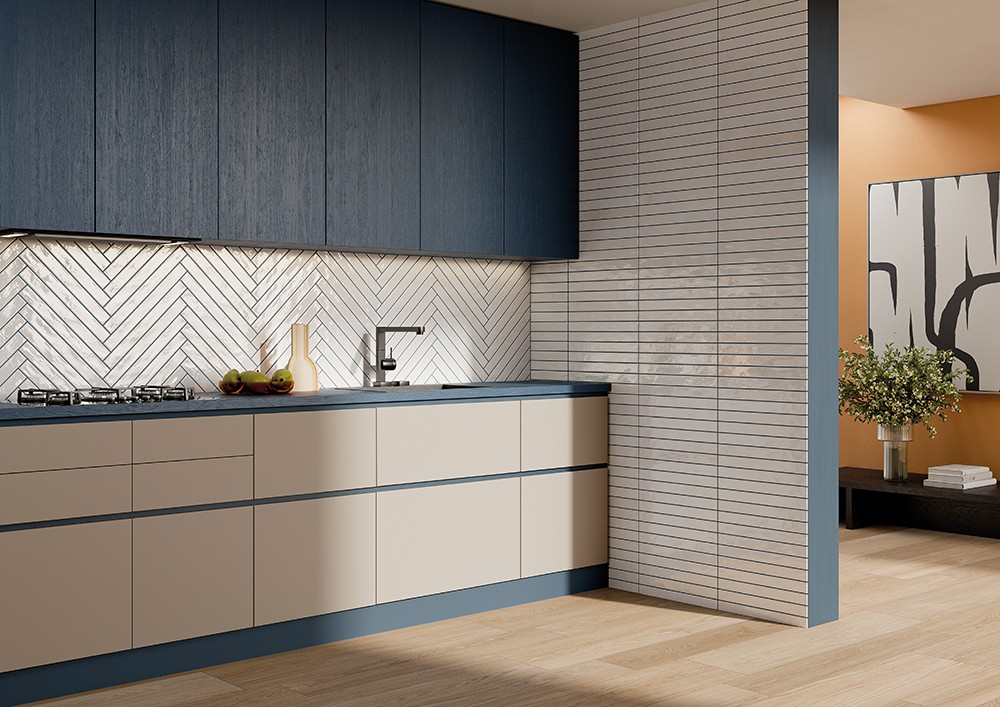
Start With One Hero Tile
Every mixed tile palette needs a lead character.
This is the tile that sets the tone for the room. It might be a marble-look porcelain with dramatic veining, a glossy zellige tile with handmade texture, a patterned tile for a bathroom floor, or a terrazzo tile with colorful chips.
The hero tile should be the one you want people to notice first.
Once you choose it, the other tiles should support it rather than compete with it. If your hero tile is bold, keep the surrounding tiles simpler. If your hero tile is quiet, you have more room to add texture, color, or pattern elsewhere.
A strong hero tile might be used on:
- A shower feature wall
- A kitchen backsplash
- A powder room floor
- A fireplace surround
- A bathroom vanity wall
- A niche or accent panel
- A full-height wall behind a freestanding tub
The key is to let that tile breathe. If every tile is treated like the feature, the space loses focus.
Follow the Rule of Three
One of the easiest ways to mix tiles without overwhelming a space is to think in threes:
- One statement tile
- One supporting tile
- One grounding tile
The statement tile adds personality. The supporting tile connects the design. The grounding tile gives the eye somewhere to rest.
In a bathroom, that might look like:
- Statement: patterned mosaic on the shower floor
- Supporting: zellige-style tile on the shower walls
- Grounding: large-format stone-look tile on the main floor
In a kitchen, it might look like:
- Statement: glossy subway tile in a herringbone backsplash
- Supporting: marble-look countertop or slab surface
- Grounding: wood-look floor tile
This approach gives you variety without visual noise. You are not choosing random tiles. You are assigning each tile a purpose.
Keep the Color Palette Tight
Color is one of the biggest reasons mixed tile designs start to feel chaotic.
That does not mean everything has to match. In fact, a room where every tile is the exact same color can feel flat. The better approach is to work within a controlled palette.
Choose two to three main tones and repeat them throughout the space.
For example:
- Warm white
- Soft beige
- Natural wood
- Brushed brass
Or:
- Smoke gray
- Deep green
- Warm ivory
- Matte black
Or:
- Cream
- Terracotta
- Soft taupe
- Natural stone
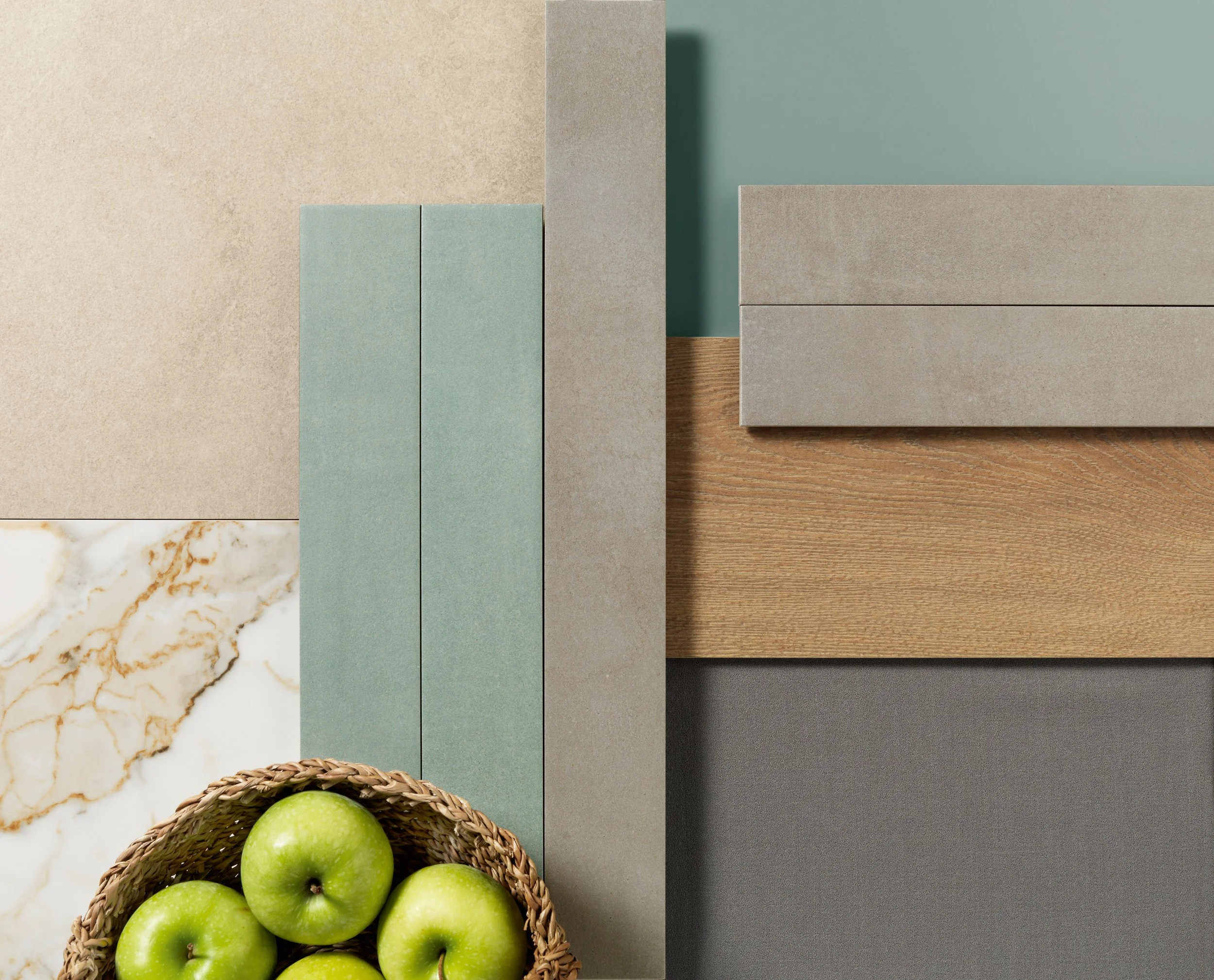
The tiles can have different textures, shapes, and finishes, but the color story should feel connected.
If you are mixing a patterned tile with a marble-look tile, look for shared undertones. If the marble-look tile has warm veining, pair it with warm neutrals instead of cool gray. If your terrazzo has green, ivory, and charcoal flecks, use one of those tones as your supporting tile color.
This is how a mixed tile palette feels designed instead of pieced together.
Mix Scale, Not Just Pattern
A common mistake is mixing several tiles that are all visually busy but similar in scale.
For example, a small mosaic floor, a small patterned wall tile, and a small decorative niche tile can feel overwhelming because the eye is constantly reading detail.
Instead, vary the scale.
A balanced tile mix might include:
- A large-format floor tile
- A medium wall tile
- A small mosaic accent
The large tile creates calm. The medium tile adds structure. The mosaic brings detail.
This works especially well in bathrooms, where you may need different tile types for different functions. Large-format porcelain can keep the main floor feeling open. A textured shower wall tile can add softness. A small mosaic or pebble tile can provide grip and detail on the shower floor.
Scale creates hierarchy. Without it, the room can feel restless.


Balance Glossy and Matte Finishes
Finish matters just as much as color.
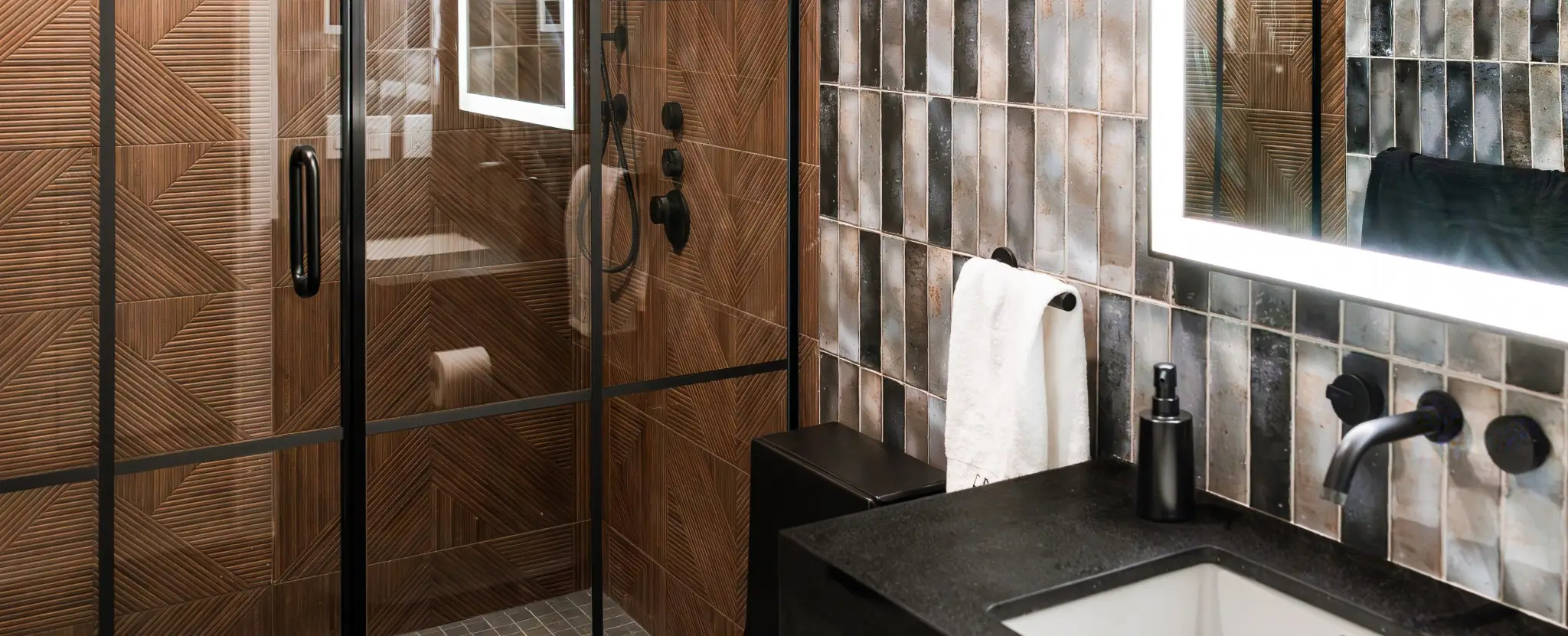
Glossy tile reflects light and adds energy. Matte tile feels softer, quieter, and more grounded. Polished stone or marble-look porcelain can feel elegant and reflective, while natural stone or textured tile brings an organic quality.
When mixing tiles, avoid making every surface highly reflective.
A glossy zellige backsplash can look beautiful with matte floor tile. A polished marble-look wall can pair well with a honed or matte floor. A high-shine feature tile can stand out more when the surrounding tiles are calmer.
Think of finish as lighting control. Gloss pulls the eye. Matte lets the eye rest.
A good rule: if one tile has a strong shine or heavy texture, let another tile be smoother and quieter.
Use Pattern With Intention
Patterned tile can completely transform a space, but it needs room to be appreciated.
Pattern works best when it has a defined zone. It could be the floor of a powder room, the back wall of a shower, a backsplash behind a range, or a framed entryway moment.
What usually does not work is using multiple unrelated patterns in one room.
For example, a geometric floor, a floral wall tile, and a heavily veined marble-look shower tile may all be beautiful individually, but together they can fight for attention.
If you want to mix pattern with another expressive tile, connect them through color or shape. A patterned tile with soft gray and ivory can pair with a gray stone-look wall tile. A terracotta patterned floor can work with a warm handmade-look wall tile. A blue-and-white pattern can sit beautifully beside a simple white subway tile.
Pattern should feel like the design moment, not the design argument.
Let One Surface Be Quiet
The most important part of mixing tiles is knowing where not to add more.
Every room needs a quiet surface.
That might be the main bathroom floor. It might be the back wall. It might be the countertop. It might be the general wall tile.
Quiet does not mean plain. It means visually calm.
A soft stone-look porcelain, a warm matte neutral, a simple subway tile, or a large-format rectified tile can give stronger materials the space they need to shine.
This is especially important in small bathrooms and kitchens, where every surface is visible at once. If the floor, walls, shower, niche, vanity wall, and backsplash all have a different design idea, the room can feel smaller and busier.
A quiet tile is what makes the statement tile look intentional.
Use Grout as a Design Tool
Grout can make or break a mixed tile design.
A matching grout color softens the look and helps different tiles feel more seamless. A contrasting grout color highlights the pattern and makes the layout more graphic.
Neither option is wrong. It depends on the goal.
If you are already mixing several tile types, a softer grout color can help calm the palette. This works well with zellige, subway tile, marble-look porcelain, and stone-look tile.
If you want the pattern to stand out, contrast grout can be effective — especially with simple subway tile, herringbone layouts, or geometric mosaics.
Just be careful. Strong grout contrast adds another visual layer. If the tile mix is already bold, high-contrast grout may push the design into busy territory.
When in doubt, choose grout that supports the tile rather than competes with it.
Think About Tile Placement
The same tile combination can look calm or chaotic depending on where each tile is placed.
A patterned tile on the floor with simple walls can feel grounded. That same patterned tile on every wall may feel too intense.
A mosaic shower floor can add texture without overwhelming the room. But using the same mosaic across multiple walls can feel visually heavy.
Placement helps create balance.
Here are a few combinations that usually work well:
- Large-format tile on the main floor with a textured tile on the shower wall
- Subway tile on the backsplash with stone-look tile on the floor
- Patterned tile on the powder room floor with solid color tile on the wall
- Marble-look porcelain on a feature wall with matte neutral tile elsewhere
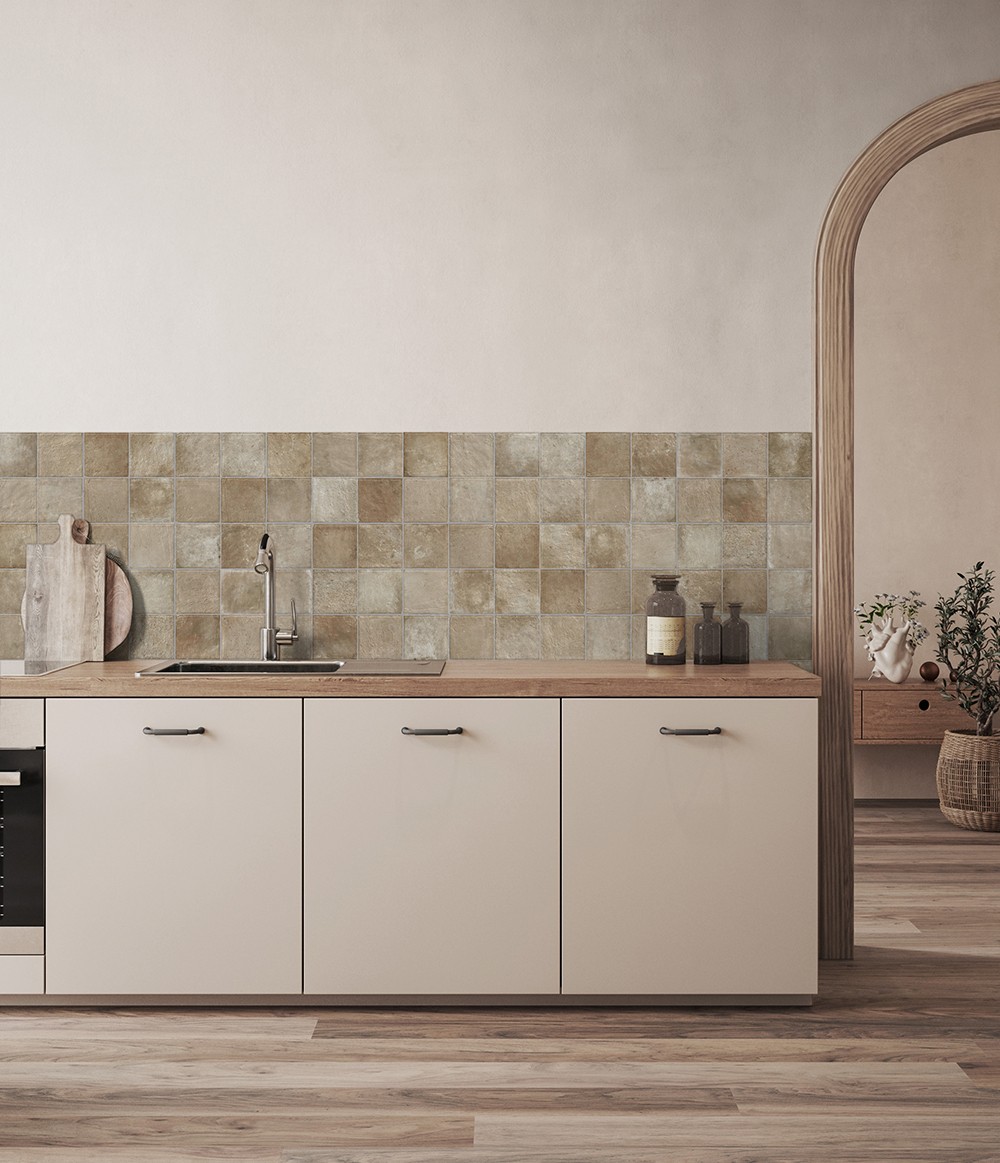
- Zellige tile as a backsplash paired with wood-look tile flooring
- Mosaic tile in a niche or shower floor paired with larger wall tiles
The more visible the surface, the more carefully it should be considered.
Match the Mood, Not Just the Color
Two tiles can technically “match” and still feel wrong together.
A rustic terracotta tile and a sleek polished marble-look tile might share warm tones, but they can create tension if the overall design does not support that contrast. A handmade zellige tile and a crisp rectified porcelain can work together, but only if the room is designed around that mix of softness and structure.
This is why mood matters.
Before choosing tiles, define the feeling of the space:
- Calm and spa-like
- Warm and organic
- Bold and graphic
- Classic and timeless
- Modern and minimal
- Earthy and textured
- Elegant and polished
- Playful and colorful
Once you know the mood, the tile choices become easier.
A calm bathroom might use stone-look porcelain, soft matte wall tile, and pebble mosaics. A bold kitchen might use a glossy subway tile, dark grout, and warm wood-look flooring. A natural powder room might use terracotta, zellige, and brushed brass.
The tiles do not need to match perfectly. They need to belong to the same story.
Frequently Asked Questions:
Yes. Mixing different tiles in one bathroom can create a custom, designer look when done intentionally. The key is to give each tile a clear role. Use one statement tile, one supporting tile, and one quiet tile to keep the room balanced.
Most bathrooms look best with two to three tile types. For example, you might use one tile for the main floor, one for the shower walls, and one smaller mosaic for the shower floor or niche. More than three can work, but the palette needs to be very controlled.
Yes. Mixing matte and glossy tiles can add depth to a room. Glossy tile reflects light and draws attention, while matte tile feels softer and more grounded. A glossy backsplash with matte flooring is a common and effective combination.
Common Mistakes to Avoid When Mixing Tiles
The first mistake is choosing every tile separately. A floor tile may look good. A wall tile may look good. A mosaic may look good. But the real test is whether they look good together.
The second mistake is using too many focal points. If the floor, wall, backsplash, and shower niche are all bold, the space can feel chaotic.
The third mistake is ignoring undertones. Cool white, warm white, cream, gray, beige, and ivory are not interchangeable. When undertones clash, even expensive tile can look wrong.
The fourth mistake is forgetting grout. Grout changes how tile reads, especially with mosaics, subway tile, and high-contrast patterns.
The fifth mistake is not seeing samples in the actual light. Tile can look very different under showroom lighting, natural light, warm bulbs, or cool LEDs. Always look at samples next to your cabinetry, countertop, fixtures, and paint colors when possible.
A Simple Tile Mixing Formula
If you want a reliable formula, use this:
Start with your hero tile. Choose one supporting tile in the same undertone. Add one quiet tile in a larger format or simpler finish. Keep grout soft unless you want the pattern to become a feature. Repeat one color or finish elsewhere in the room.
For example:
A glossy green zellige backsplash can pair with warm stone-look flooring and brass fixtures.
A patterned bathroom floor can pair with matte ivory wall tile and a simple mosaic shower floor.
A marble-look shower wall can pair with large-format neutral floor tile and a small mosaic niche.
A wood-look floor can pair with subway tile and a stone-look countertop.
This formula works because it gives every tile a role.
When to Get Help Choosing Tile Combinations
Mixing tiles is easier when you can see the materials together.
Photos and online inspiration are helpful, but tile has depth, texture, thickness, finish, and undertones that are difficult to judge on a screen. A glossy tile may reflect more than expected. A matte tile may feel warmer in person. A mosaic may look busier once grout is added. A marble-look tile may have veining that changes the whole palette.
This is where a showroom visit can save time and second-guessing.
At Galactic Tiles, customers can compare tile styles, finishes, sizes, colors, and applications in person. Our team can help you build a palette that works across the full space — from bathroom walls and shower floors to kitchen backsplashes, flooring, countertops, fixtures, and cabinetry.
The goal is not just to find beautiful tile. The goal is to find the right combination.
Final Thoughts
Mixing tiles should not feel like guessing.
A beautiful tile palette is built through hierarchy, restraint, contrast, and connection. Choose one hero tile. Support it with quieter materials. Keep your color palette controlled. Mix scale thoughtfully. Use grout intentionally. Let some surfaces breathe.
When done well, mixed tile designs make a space feel layered, personal, and high-end.
When done poorly, they make the room feel busy before the furniture, fixtures, and styling are even added.
The difference is planning.
If you are designing a bathroom, kitchen, shower, backsplash, powder room, or full renovation, visit Galactic Tiles to explore tile styles in person and build a palette that feels cohesive from the start.